
The Row label vs. Bottega Veneta: Measuring Quiet Luxury Icons
Quiet luxury has a vocabulary, and two houses wrote most of it. The Row and Bottega Veneta both deal in understatement instead of branding, structure over trend, and cost levels that repay patience rather than impulse. Still, each label reaches minimalism by a different route, and the distinction matters if you’re trying to decide where to spend four-figure sums on a bag or a coat. Rooted in tailoring and fabric purity, The Row’s approach draws on an American ready-to-wear sensibility. Bottega Veneta, an Italian house, built its identity on leather craft, specifically the intrecciato weave that became shorthand for understated wealth. Anyone looking into either name is usually comparing philosophies as much as products, so this piece examines both with equal weight before honing in on where The Row comes out ahead.
Origins and Design Philosophy of the Brands
Mary-Kate and Ashley Olsen started The Row in 2006, turning away from the fast-fashion habits of their earlier ventures in favor of couture-caliber construction marketed as ready-to-wear. What shapes their design is elongated lines, muted color choices, and materials including double-face cashmere and Japanese cotton poplin. There are no visible logos on most pieces. Bottega Veneta traces back to 1966 in Vicenza, Italy, and built its reputation on leather goods before expanding into ready-to-wear decades later. Introduced in https://rowbag.com/shoulder-bags/ the 1970s, its hallmark intrecciato weave served as a method to communicate luxury with no branding whatsoever.
A “logo-less” approach unites both houses, but the way it’s carried out diverges. The Row leans toward architectural minimalism in clothing first, bags second. Bottega Veneta built its entire modern identity around leather goods and only recently pushed harder into apparel under creative direction changes. People discussing quiet luxury as a movement often bring up The Row’s tailoring alongside Bottega’s woven leather, even though crossover between the brands’ supply chains or manufacturing bases is rare. The Row produces largely in Italy with some pieces made in the U.S., while Bottega Veneta manufactures almost entirely in Italy, concentrated near its Vicenza roots.
What Distinguishes The Row’s Bags
The Row bags overview conversations tend to start with the Margaux, the brand’s most recognized silhouette. First introduced as an open-top tote with a loose, unstructured body, it looks different from one wearer to the next, which is part of its appeal. Below Margaux in visibility sits the Sofia, a top-handle bag with a more rigid frame, and the Bourse, a smaller crossbody style favored for its compact hardware-free closure. These rank among the top row bags most often mentioned by both stylists and resale platforms.
Construction is the point at which The Row bag lives up to its price. Hide selection skews toward vegetable-tanned and semi-aniline hides, picked based on how they age rather than how they look brand new. The stitchwork is deliberately understated, more often than not single-needle stitching leaving seams that are nearly invisible. There’s no embossed logo on the exterior of the majority of styles; verification comes from an interior stamp only. This has made counterfeiting a real issue, and it’s one reason shoppers look for direction on where to buy The Row Margaux bag through verified channels as opposed to unofficial resellers with uncertain sourcing. Its official website and a small number of approved luxury stockists stay the surest option for anyone chasing a true original instead of a well-made fake.
Bottega Veneta’s Bag Lineup: Beyond the Signature Weave
The brand’s bag offerings centers on the intrecciato technique, a technique where leather strips are woven rather than cut and stitched flat. The Cassette, Jodie, and Pouch styles each display this method in a range of proportions, spanning clutch dimensions up to full-size shoulder bags. During Matthieu Blazy’s run as creative director, concluding in 2024, the house leaned into padded, pillowy silhouettes that smoothed out its previously sharper, more geometric aesthetic. The designer who followed him has kept polishing instead of overhauling, which tells you something about how conservative bag design has turned across understated luxury labels generally.
Pricing at Bottega Veneta typically starts around $2,000 for smaller woven leather styles and pushes past $5,000 for bigger tote styles in exotic materials. The brand additionally makes non-woven lines, such as the Arco bag, swapping out the intrecciato weave for sculpted handles paired with smooth leather. Compared to The Row bags, Bottega’s designs generally carry a greater degree of texture and a slightly younger, trend-aware edge, even inside a pared-back design language. Where The Row asks you to notice the absence of detail, Bottega Veneta frequently highlights the artistry behind one distinct, deliberate detail.
Price Points and Value Retention
The Row’s handbags usually open near $1,500 for more compact designs and reach $6,000 or more for exotic-skin versions of the Margaux. Ready-to-wear runs even higher, with cashmere coat styles regularly listed above $4,000. Bottega Veneta’s price range sits in a similar range for leather items, though its ready-to-wear line tends to run slightly lower than The Row’s most elevated tailored pieces. Both labels steer clear of regular discounting, which keeps resale values fairly steady, but a genuine row sale is rare enough that shoppers regard it as a real event instead of something to expect every season.
Per resale-platform data, The Row handbags hold 60 to 75 percent of initial value throughout the first two years, provided that the leather is looked after correctly. Bottega Veneta’s woven styles perform comparably, sometimes slightly higher for limited editions or collaborations. Since neither house cuts prices aggressively at retail, buyers find appeal in these pieces as long-term holdings rather than short-lived trend pieces. When a the row sale does appear, whether through the brand’s own site or an authorized department store, pieces move quickly, since the discount window tends to be narrow and inventory limited.
Side-by-Side Comparison: The Row vs. Bottega Veneta
| Category | The Row | Bottega Veneta |
|---|---|---|
| Founded | 2006, United States | 1966, Italy |
| Iconic style | Margaux tote | Cassette / Jodie |
| Defining construction style | Clean, stripped-down build, single-needle stitching | Intrecciato woven leather |
| Starting price point | ~$1,500 | ~$2,000 |
| Top bag price range | $6,000+ (exotic-leather styles) | $5,000+ (exotic/large formats) |
| Manufacturing base | Italy, a portion of U.S. production | Italy (the Vicenza area) |
| Value held on resale (2 yrs) | 60–75% | 55–75% |
| Design focus | Rooted in tailoring, bags as extension | Leather-driven, apparel secondary |
Which Label Suits Your Closet?
Choosing between them often comes down to what a shopper already owns and how they dress day to day. A person building a closet around tailored trousers, oversized coats, and a restrained neutral palette will find The Row fashion sensibility slots in naturally, since the house designs clothing and bags as a unified whole. Built specifically to disappear into a look rather than announce itself, the Margaux, which is exactly why it became the unofficial uniform bag of quiet luxury dressing. If your existing pieces already lean toward architectural minimalism, The Row tote bag styles will read as a natural extension rather than a departure.
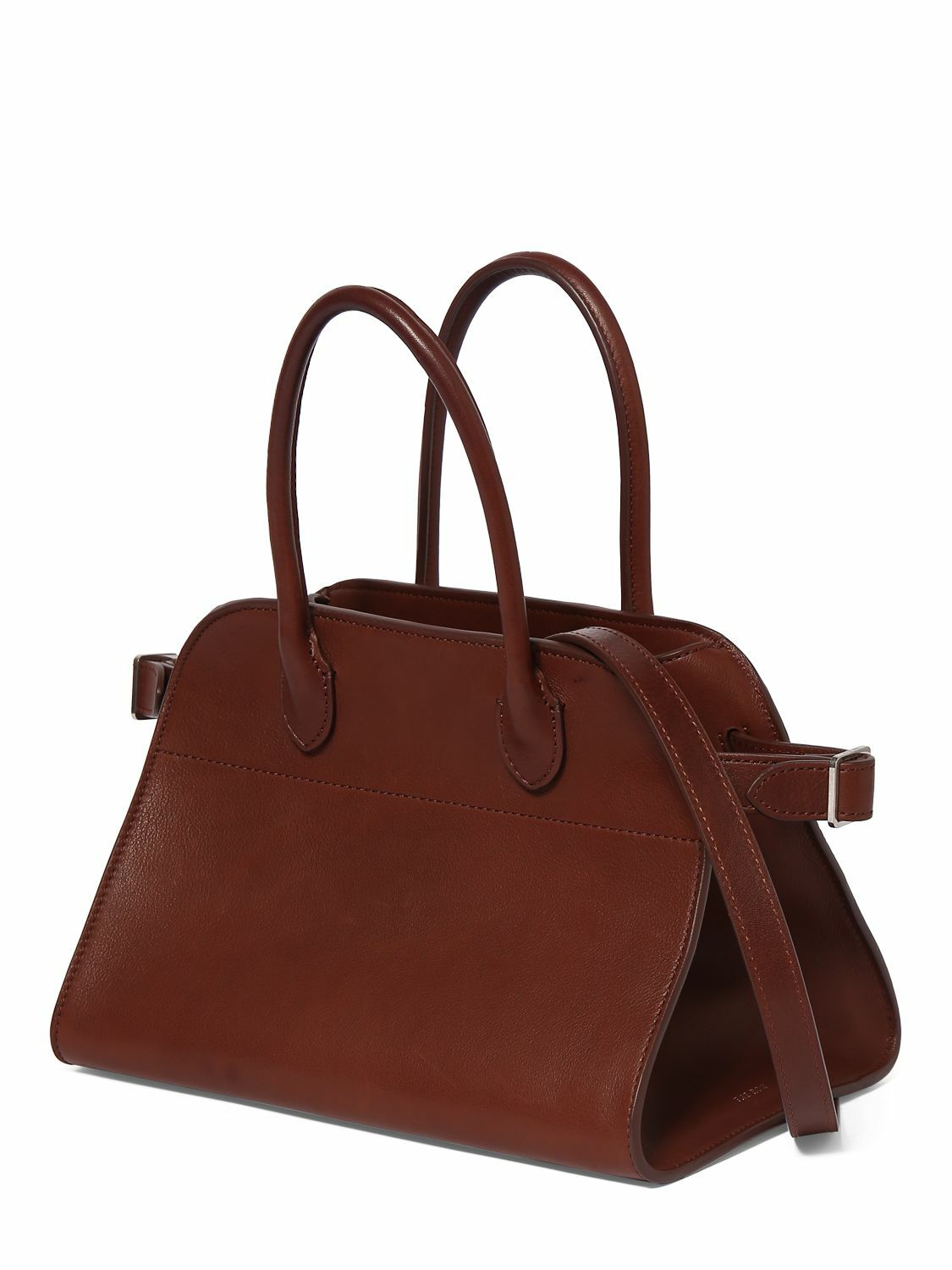
Bottega Veneta caters to a different sensibility, one drawn to tactile detail and a bit more visual interest within a otherwise restrained frame. The braided leather serves as the design statement, so someone who wants texture without logos or hardware will likely gravitate here first. Both brands reward buyers willing to research before purchasing, since counterfeits circulate heavily for both the Margaux and Bottega’s woven styles. Comparing row handbags against Bottega’s offerings next to each other, in person if possible, remains the best way to evaluate weight, leather grain, and stitching quality before buying.
Bottom Line for 2026 Shoppers
On paper, there’s no definitive winner between the two; rather, both address different style needs. The Row stays the better pick for shoppers prioritizing both tailoring and bags together, since its ready-to-wear and accessories were conceived as one cohesive language from day one. Those wanting a bag-centric purchase will find Bottega Veneta more suitable with an unmistakable, well-known construction style that doesn’t rely on a logo to communicate value. Budget matters too: The Row’s starting price point on small leather goods nearly matches Bottega’s, but The Row’s clothing line reaches a considerably steeper top price.
Heading into 2026, keep an eye on both brands’ official sites plus a short list of authorized retailers for verified stock, particularly around the Margaux, where demand consistently outpaces supply. Those shopping around for the best row bags should cross-check interior stamps, hardware finish, and stitching density with verified reference images before spending resale-level prices. Whichever house you choose, both mark a rare instance in the luxury market where restraint—rather than decoration—is what’s truly being sold.